
Images Are Language, Not Decoration
When OpenAI announced GPT Image 2, they opened with a sentence that framed the whole release: "Images are a language, not decoration. A good image does what a good sentence does — it selects, arranges, and reveals." For a news platform, that framing matters. A featured image isn't filler next to a headline; it's part of the argument the article is making. It sets the mood, establishes credibility, and often decides whether a reader clicks at all.
That's why today NewsPro is migrating its entire automated image pipeline from Grok Imagine to OpenAI's GPT Image 2 — the newest, most capable image generation model on the market. Every featured image, every body illustration, and every AI-generated author avatar on every NewsPro site now comes from GPT Image 2, starting with your next scheduled AI run.
Why We Moved Off Grok Imagine
Grok Imagine was a strong first choice. It was fast, it was cheap, and its flat 20-credits-per-image pricing made cost forecasting effortless. It served NewsPro's early AI article runs well. But as our publishers scaled from occasional posts to hundreds of articles per week, the gaps started to matter. Grok Imagine handled generic stock-style compositions competently, but struggled with anything that required specific detail, non-English text, or editorial composition — the three things that news photography needs most.
We ran head-to-head benchmarks using real NewsPro article prompts across breaking news, politics, sports, business, and lifestyle. GPT Image 2 won on every dimension that matters for a news site: composition, realism, prompt adherence, text rendering, and — crucially — multilingual accuracy.
What's Actually Different About GPT Image 2
OpenAI describes Images 2.0 as "a step change in detailed instruction following, placing and relating objects accurately, and rendering dense text." In our testing, that's not marketing language — it's measurable. Here's what changed in practice:
Dramatically Better Text Inside Images — Including Hebrew
This one is a genuine breakthrough. Every previous image model, Grok Imagine included, produced garbled, half-invented letters whenever a prompt asked for text inside the image — and the problem got much worse in non-Latin scripts. GPT Image 2 is the first model where you can reliably request a specific Hebrew headline, a Japanese kanji sign, a Chinese banner, or Arabic captions and expect the result to be readable and coherent.
For NewsPro publishers in Israel, this is a particularly big deal. Until now, any article cover that tried to render Hebrew text was unreliable at best. GPT Image 2 renders Hebrew cleanly, including diacritics, punctuation, and mixed directional text — which opens up magazine-style covers, news graphics with overlaid headlines, and explainer images as realistic options inside the automated pipeline for the first time.
Stylistic Sophistication and Photorealism
The image output no longer looks "AI-ish." Skin textures, hands, fabric, lighting, and environmental detail render with the tiny imperfections that real photographs have. Compositions respect the rule of thirds, keep their focal points clean, and leave appropriate negative space for overlaying titles on social cards. The model handles a genuine range of visual languages — photojournalism, cinematic stills, pixel art, manga, midcentury illustration — and stays inside the style you asked for rather than drifting toward a generic house look.
Precise Instruction Following
If you write a long, detailed prompt, GPT Image 2 reads it. It places the right object in the right place, respects relative positioning ("left of," "behind," "held by"), preserves small requested details like specific clothing or accessories, and keeps iconography and UI elements legible. You spend less time fighting the model and more time getting images you can actually ship.
Current World Knowledge
GPT Image 2 has a knowledge cutoff of December 2025. It knows who current political figures are, what recent products look like, and how modern cityscapes and technology appear today. For a news platform that's essential — a cover image about a 2026 political event should look like 2026, not like a stale composite of five-year-old reference photos.
Flexible Aspect Ratios
The model supports ratios as wide as 3:1 and as tall as 1:3. NewsPro's pipeline continues to use the three most useful ratios for publishers — landscape 16:9 for featured images, square 1:1 for author avatars, and portrait 9:16 for body illustrations where it makes sense — but the flexibility is there if we need to extend the pipeline in the future (wide banners, vertical mobile covers, social story cards).
Transparent, Per-Token Pricing
One of the most important reasons we chose GPT Image 2 isn't visual at all — it's billing transparency. Grok Imagine used a simple flat rate: one bundle of credits per image, regardless of complexity. That's predictable, but it doesn't reflect what the image actually cost to produce. GPT Image 2 bills exactly like a language model — you pay for the input tokens (your prompt) and the output tokens (the image itself).
NewsPro's cost tracking system has been upgraded to match. Every single image generation is now recorded with token-level precision in your run log. Specifically:
- Text input: $5 per 1,000,000 tokens
- Image output: $30 per 1,000,000 tokens
What this works out to in practice:
- Landscape featured image (1536×1024, medium quality) — about 1,372 image tokens → $0.041 (41 credits)
- Square author avatar (1024×1024, medium quality) — about 1,756 image tokens → $0.053 (53 credits)
- Low-quality draft image — about 158 image tokens → $0.005 (5 credits)
Every run log now shows exactly how many tokens each image consumed and the resulting cost in dollars and credits — right alongside the cost of the research, writing, and editing phases. Nothing is hidden behind a flat rate, and every penny is traceable back to the specific API call that produced it.
What Publishers Will Notice
The transition is designed to be invisible at the operational level. Scheduled runs, daily limits, category rules, approval workflows, and the dashboard UI all behave exactly as before. No settings to change, no migrations, no downtime. On the visual side, expect:
- More cinematic featured images. Better depth, lighting, and environmental context. Compositions that actually look like editorial photography rather than flat stock imagery.
- Better faces and hands. The classic AI "tells" — warped fingers, glassy eyes, fused ears, melted jewelry — are largely gone at medium quality.
- Scene-accurate rendering. Prompts that describe a specific location (a protest, a stadium, a courtroom, a crime scene, a Knesset committee) produce images that actually match the described setting.
- Readable text in image overlays. For the first time, article covers can include rendered headlines — in Hebrew or English — without visual garbage.
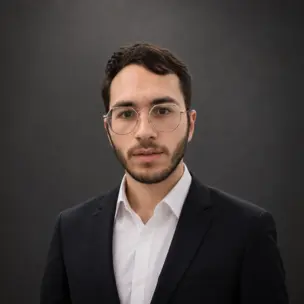
- Professional-grade author portraits. New AI bylines now come with headshots that genuinely pass for professional photography, strengthening author-page credibility.
Grok Imagine Isn't Going Anywhere
GPT Image 2 is now the default across the platform, but NewsPro's architecture remains fully provider-agnostic. Each tenant's ai_model_image_primary setting still controls which model is used, and every image model we've ever supported — Grok Imagine, Imagen 4, Stable Diffusion, Runway Gen4, Gemini 2.5 Flash Image — remains fully functional and one click away. Publishers who prefer the predictable flat rate of Grok Imagine, or who like its specific visual style for certain types of content, can switch back at any time from the AI settings panel.
Cost tracking stays model-aware. Whichever engine you select, the run log will compute and record the exact cost per image using the correct pricing rules for that provider — flat per-image for Grok, per-token for GPT Image, per-image for Imagen, and so on.
Known Limitations (Honest Version)
We want to set expectations clearly. GPT Image 2 is a major leap forward, but it's not perfect. OpenAI itself notes that the model can still struggle with tasks that require a complete coherent physical world model — origami guides, Rubik's Cubes, details on hidden or reversed surfaces, and extremely dense repetitive patterns like fine grains of sand. Labels and diagrams that rely on precise arrows or part names may still need a human review pass. For NewsPro's use case (news photography, covers, portraits, scene illustrations) these limitations rarely come up — but if you're generating technical diagrams or infographics, expect to do a quick accuracy check before publishing.
The Bottom Line
Better images. Accurate Hebrew. Transparent costs. No workflow changes. This is the kind of upgrade we like shipping — one where publishers open their dashboard, see sharper articles going live, and the numbers in their usage report stay perfectly legible and honest. GPT Image 2 is live on every NewsPro site today, and we'll keep tracking OpenAI's release cadence so that NewsPro publishers are always running on the best image infrastructure the industry has to offer.


